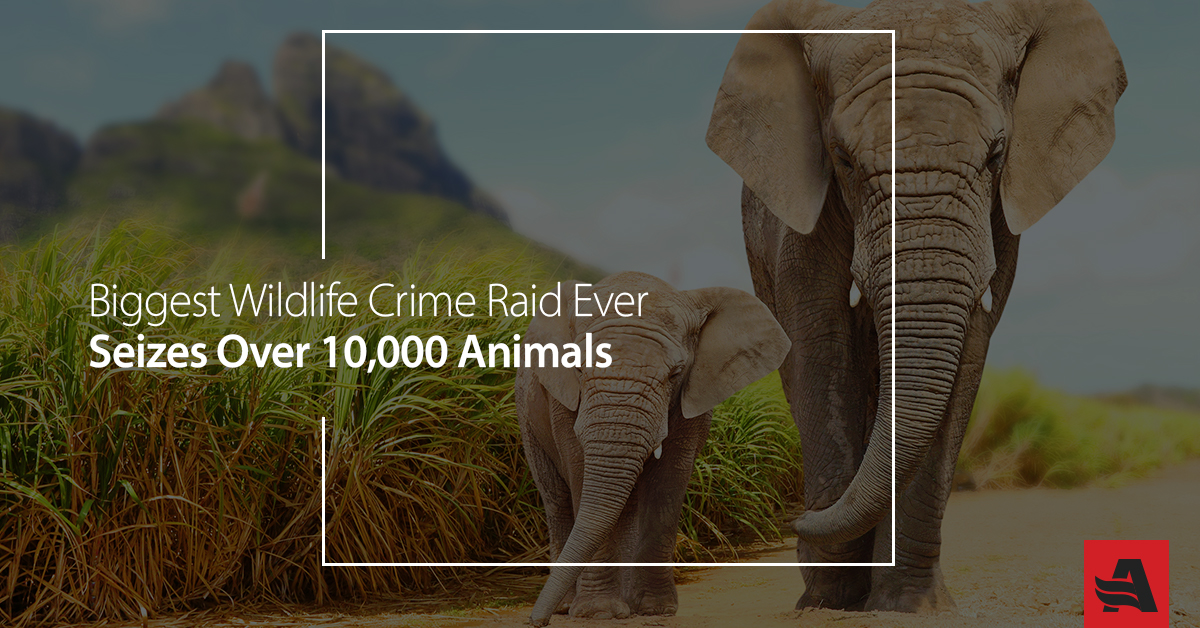
It’s the most widespread wildlife crime raid in history…
In June, INTERPOL and the World Customs Organization (WCO) performed a 26-day anti-trafficking campaign in over 109 countries.
Named ‘Operation Thunderball,’ the campaign executed 1,828 seizures. With local partners, the organizations recovered lion and tiger cubs, dolphins, sharks, 9,820 marine species, 9,777 live tortoises and turtles, 4,304 birds, 1,422 live reptiles, 545kg of ivory, 23 live primates, and more.
And check out these trafficking suspect numbers…
In addition to wildlife seizures, 21 people were arrested in Spain, and three people were arrested in Uruguay. According to INTERPOL, nearly 600 people were identified as wildlife and timber trafficking suspects.
Operation Thunderball is third in a series of anti-trafficking campaigns. In 2018, INTERPOL and WCO performed Operation Thunderstorm, and in 2017 they executed Operation Thunderbird. All three raids targeted the multi-billion dollar illegal wildlife and timber trade.
Global Impact of Illegal Wildlife Trade
World Wildlife Foundation (WWF) stated that our world is dealing with an “unprecedented spike in illegal wildlife trade.” Wildlife trafficking is big business, and it’s controlled by “dangerous international networks” that traffic animals and animal parts like illegal guns and drugs.
On a July 10th press release, Jürgen Stock, INTERPOL Secretary General, stated, “Wildlife crime not only strips our environment of its resources, it also has an impact through the associated violence, money laundering and fraud. Operations like Thunderball are concrete actions targeting the transnational crime networks profiting from these illicit activities. We will continue our efforts with our partners to ensure that there are consequences for criminals who steal from our environment.”
INTERPOL and the WCO have a long history of supporting each other’s operations in a global field. Initiatives like Operation Thunderball will be replicated to raise awareness in the global law enforcement community.