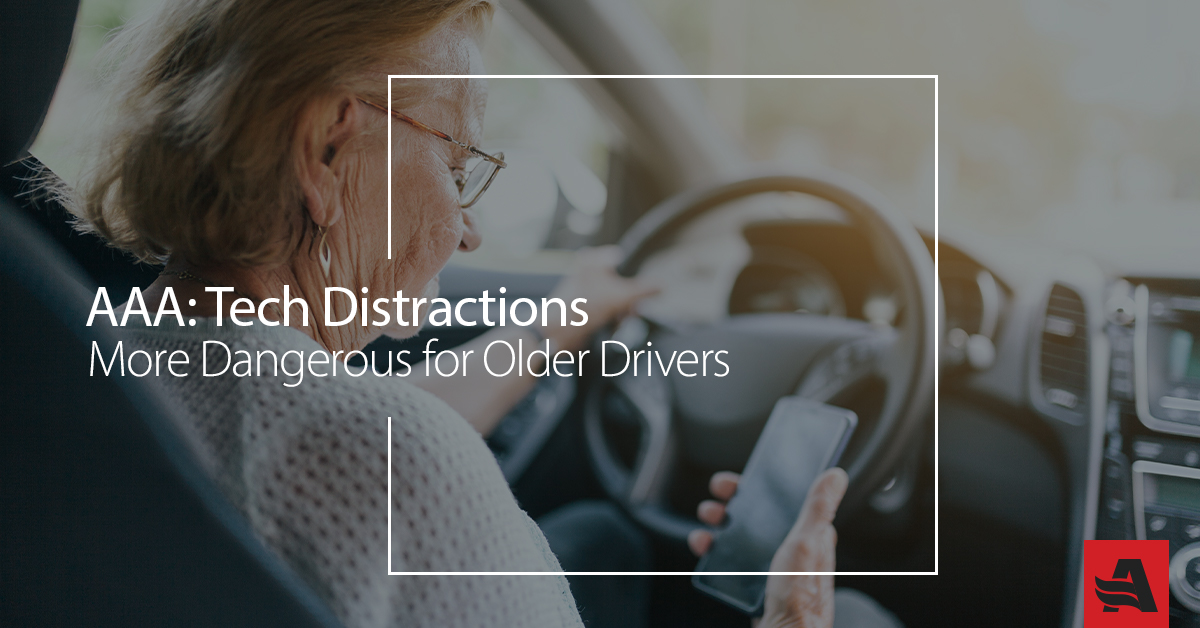
A new AAA study in distracted driving shows that older drivers are more at risk.
Breaking news at CBS shows some of the results of the study, which found that drivers aged 55 and older have slower response times than younger drivers when using smartphones and tech — like infotainment or other distracting apps.
Specifically, older drivers were up to eight seconds slower to respond than younger cohorts.
AAA points out that response time is key in preventing severe and even fatal accidents.
There wasn’t much more technical data in the study as it was reported in tech media, but the issue itself has seen a lot of press as municipalities, states, and the federal government work to decrease the impact of distracted driving technologies.
A statistic from AAA shows that by 2030, drivers 65 years of age or older will constitute more than one-fifth of all drivers on American roadways.
Self-driving cars may be a mitigating factor, but without key control of infotainment and smartphone technologies, distracted driving may become an even greater danger, according to some analysts.
The problem is widespread: A 2017 study reported by the U.S. Insurance Institute of Highway Safety found that 3% of all monitored drivers were speaking into a cell phone at intersections.
Safety agencies delineate between hands-free or cellphone voice calls, and the types of text messaging and infotainment apps that would actually divert the driver’s vision from the road. Meanwhile, the IIHS cites “scant information on drivers’ compliance with texting bans,” while states have found that in many cases, banning texting or cell phone use by younger drivers can improve safety outcomes.
While these graduated driving laws can help with risk for newer drivers, the AAA study suggests that a focus on older drivers may also be necessary. AAA notes that taking a driver’s eyes off of the road for only two seconds doubles crash risks, according to USA Today.